
Dear [%Name | Friend%],
Greetings in the name of the Father, the son, and the Holy Spirit.
“But the angel said to them, ‘Do not be afraid. I bring you good news that will cause great joy for all the people. Today in the town of David a Savior has been born to you; He is the Messiah, the Lord.’” – Luke 2:10-11

Where do we look for joy today?
For some, it’s the moment the final email is sent before vacation. For others, it’s hearing laughter around a dinner table, unwrapping gifts, or watching a child’s face light up under twinkling lights. We chase joy in relationships, careers, adventures, and memories. And for a little while, it works. But then — the moment fades. The laughter quiets. The decorations come down. The inbox fills again.
Joy, in our world, often feels like a soap bubble — beautiful for a second, gone the next.
But the human heart keeps reaching for something deeper, something more durable. And that longing becomes sharper during Advent, a season meant not only for waiting but for rediscovering where real joy begins.
This week, the third candle of Advent is lit — the candle of Joy. It shines brightly against the darker weeks of waiting. And to understand its meaning, we go back to the first Christmas — the night joy burst into a weary world.
That night, God didn’t reveal His greatest gift to kings or celebrities, but to two surprising groups: a few forgotten shepherds and a band of foreign travelers. One group was nearby, the other came from far away, but both found joy that couldn’t be contained — a joy that began not with what they did, but with what God did.
Their stories show us that true joy doesn’t come from looking inward or around, but from looking toward the newborn King, Jesus Christ.
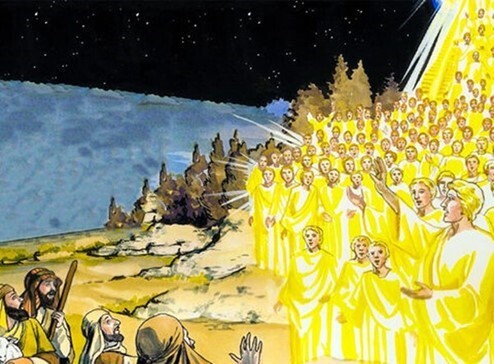
I. The Joy of the Simple: The Shepherds’ Immediate Response (Luke 2:8–18)
It was an ordinary night in an unremarkable field. The air hung cold and still, the stars scattered across the dark sky. A few shepherds sat near a small fire, listening to the low bleating of sheep. Their hands were rough, their clothes worn. In that society, shepherds were almost invisible — too poor to matter, too common to be honored. Their work was constant, lonely, and usually unnoticed. Yet on that silent night, heaven noticed them.
Luke records it simply but powerfully:
“And there were shepherds living out in the fields nearby, keeping watch over their flocks at night. An angel of the Lord appeared to them, and the glory of the Lord shone around them, and they were terrified. But the angel said to them, ‘Do not be afraid. I bring you good news of great joy that will be for all the people.’” (Luke 2:8–10)
The glory of God — that blinding brilliance which once filled the Temple — now illuminated a hillside of forgotten men. The message that would change the world began not in a palace, but in a pasture.
The angel’s first words were not a command, but comfort: “Do not be afraid.” God’s good news always begins with grace. It wasn’t a message of judgment or demand; it was an invitation to joy.
“Today in the town of David a Savior has been born to you; He is Christ the Lord.” (Luke 2:11)
To you, the angel said — to shepherds, to the overlooked, to those who thought heaven had no room for them. This joy wasn’t for the powerful few, but for all people.
The shepherds could have stayed where they were. They could have doubted, delayed, or dismissed it as too good to be true. But they didn’t. Scripture says,
“They said to one another, ‘Let’s go to Bethlehem and see this thing that has happened, which the Lord has told us about.’” (Luke 2:15)
They didn’t hesitate. They went — running, not walking — because when God invites, the humble heart responds.
When they arrived, they found the baby exactly as promised — “wrapped in cloths and lying in a manger.” (v. 16) The King of glory in a feeding trough. Heaven in straw. It was a scene no one would have scripted, and yet, it was the most joyful sight on earth.
Luke continues,
> “When they had seen Him, they spread the word concerning what had been told them about this child… The shepherds returned, glorifying and praising God for all the things they had heard and seen.” (Luke 2:17, 20)
Their joy could not be contained. The men who once worked in silence became witnesses shouting in praise. They had no crowns to offer, no gifts of gold — only hearts overflowing with wonder.
Application:
This is where true joy begins — in hearts humble enough to be surprised by God. You don’t need to be powerful, talented, or perfect to receive it. God’s joy is for the simple, for the unseen, for the ordinary people who dare to listen when heaven speaks.
Maybe your days feel repetitive or unnoticed. But joy is not found by escaping the ordinary; it is discovered when the extraordinary grace of God enters your everyday life.
The shepherds didn’t find joy by changing their job — they found it when God stepped into their night. And that same voice still calls today: “Go and see.” Joy doesn’t wait for a better season; it begins the moment you take a single step toward Him.
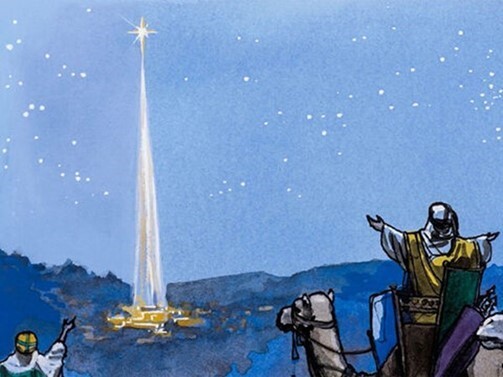
II. The Joy of the Seekers: The Wise Men’s Persevering Pursuit (Matthew 2:1–12)
If the shepherds teach us that God’s joy is for the simple, the Wise Men show us that it’s also for the searching — for those who are still on the road, still asking questions, still seeking light in the dark.
The Wise Men — or Magi — were scholars from the East, most likely from Persia or Babylon. They were learned men, astronomers and philosophers who spent their lives studying the heavens and interpreting mysteries. They weren’t Israelites, nor were they raised with the promises of the Old Testament. But they had something just as important — a hunger for truth.
One night, as they studied the stars, something unusual appeared: a new light, a star unlike any they had ever seen. To others, it may have been just another point of light in the sky. But to them, it was a sign — a divine summons.
“After Jesus was born in Bethlehem in Judea, during the time of King Herod, Magi from the east came to Jerusalem and asked, ‘Where is the one who has been born king of the Jews? We saw His star when it rose and have come to worship Him.’” (Matthew 2:1–2)
Their response was immediate. They packed their treasures, left the safety of home, and set out on a journey that would take months, perhaps years. They crossed deserts, endured danger, and traveled under uncertainty — all because their hearts told them there was something worth finding.
Their pursuit reminds us that joy often comes through seeking.
But their journey wasn’t straightforward. They stopped first in Jerusalem — the obvious place to look for a king — only to find a paranoid ruler, Herod, who was troubled by news of another King. The star that had guided them disappeared for a time. They must have felt confused. Had they misunderstood?
Yet they didn’t quit. They kept searching, trusting that the light they saw once would appear again.
And then, at last, Scripture says:
“When they saw the star, they rejoiced exceedingly with great joy.” (Matthew 2:10)
It’s one of the most expressive phrases in the Bible — “they rejoiced exceedingly with great joy.” The repetition is intentional. It describes joy overflowing its limits, joy that cannot be contained.
Their joy was not found in arriving at a palace or meeting a prince in royal robes. Instead, it came when the star led them to a small, ordinary house in Bethlehem — and inside, a young mother and a child.
“They saw the child with His mother Mary, and they fell down and worshiped Him. Then they opened their treasures and presented Him with gifts of gold, frankincense, and myrrh.” (Matthew 2:11)
No royal guards. No grand entrance. Just a quiet home and a humble Savior. And yet they knew — they were standing before the true King.
They gave what they had — their best gifts — not because the child needed them, but because their hearts were full. This is what worship always is: a joyful surrender of what’s valuable, offered freely to the One who is worthy.
Application:
God’s joy is for the seeking and questioning heart. Maybe you’ve been searching for meaning — reading, exploring, wondering where truth lives. The story of the Magi reminds us that God honors sincere seekers.
“You will seek Me and find Me when you seek Me with all your heart.” (Jeremiah 29:13)
The same God who guided the Magi by a star still guides those who long for truth. And often, like them, we find that joy doesn’t come from where we expect. It’s not in Jerusalem — the city of power — but in Bethlehem, the place of humility.
Joy is not found in success, status, or answers that make sense on paper. Joy is found in the presence of Jesus — in kneeling before Him and realizing that the One we sought has been seeking us all along.
Their journey teaches us this truth: when you seek truth with humility, you don’t just find understanding — you find the One whom they have long searched for.
And that encounter changes everything.
Like the Wise Men, we bring our treasures — our questions, our fears, our gratitude, our hearts — and lay them before the King who welcomes us.
That is worship. That is joy.
“The light shines in the darkness, and the darkness has not overcome it.” (John 1:5)
The same light that led the Magi still shines for every seeking soul. Follow it — and you, too, will find uncontainable joy.

III. The Joy of the Saved: Our Eternal Reason for Rejoicing (John 3:16)
The joy of the shepherds — the joy of the Wise Men — both find their fulfillment in the ultimate reason Jesus came. The angel called it “good news of great joy,” but that joy wasn’t just for a single night in Bethlehem. It was joy born for all generations, joy that could outlast sorrow, suffering, and even death itself.
Why did God send His Son into the world as a baby? Why such humility, such vulnerability?
John 3:16 gives us the clearest answer:
“For God so loved the world that He gave His one and only Son, that whoever believes in Him shall not perish but have eternal life.”
This is the heart of the Gospel — and the heartbeat of true joy.
The baby in the manger was born to be the Savior on the cross. Then later He was stretched out on a Roman cross at Calvary — to carry the full weight of humanity’s sin and sorrow.
It’s almost unthinkable. The Creator entered His own creation. The Eternal One stepped into time. The Holy One came not to condemn, but to redeem with His unfathomable love.
“God did not send His Son into the world to condemn the world, but to save the world through Him.” (John 3:17)
The cross was not a tragic ending — it was a divine rescue. Through His death, Jesus tore down the wall that separated us from God. Through His resurrection, He opened the door to eternal life – an everlasting joy no power on earth or in hell can take away.
This is not a fragile, fleeting joy. It’s not the temporary happiness that depends on things going right. This is a joy anchored in something unshakable — the unchanging love and faithfulness of God.
Eternal Joy Has Three Dimensions
1. Joy in Forgiveness
Sin once chained us with guilt and shame, but Christ has broken those chains. He carried our debt and declared us free.
“Blessed is the one whose transgressions are forgiven, whose sins are covered.” (Psalm 32:1)
Forgiveness doesn’t erase the past — it redeems it. And that redemption becomes the song of the saved.
David once cried, “Restore to me the joy of Your salvation.” (Psalm 51:12) When we are forgiven, joy springs up again — deep, healing joy.
2. Joy in Peace
Before Jesus, humanity lived at odds with God, restless and afraid. But because of Him,
“We have peace with God through our Lord Jesus Christ.” (Romans 5:1)
This peace doesn’t mean our circumstances are calm — it means our souls are. It’s the kind of peace that can whisper in the storm, “Be still,” and calm both the wind and the heart.
3. Joy in Hope
Salvation gives us not only a new beginning, but a future that cannot be lost.
Jesus said,
“I have told you this so that My joy may be in you and that your joy may be complete.” (John 15:11)
This hope carries us through sorrow and loss, because the story doesn’t end here.
Even in the shadow of death, we can say, “I will dwell in the house of the Lord forever.” (Psalm 23:6)
The joy of salvation is not for one season — it is eternal. It’s a joy no circumstance can steal, no darkness can quench, no grave can silence.
Application: The Joyful Invitation
This same joy — the uncontainable, unshakable, undeserved joy — is offered to you today.
It’s the joy that meets you in the ordinary fields of life, like the shepherds. It’s the joy that rewards the long, uncertain journey of the seeker, like the Wise Men. And it’s the joy that saves and transforms your soul through the love of Christ.
This is not a joy you earn. It’s not achieved — it’s received.
God’s invitation is simple: Come and see.
Come as you are — with your questions, your pain, your hopes, and your fears.
Because joy is not the absence of trouble — it’s the presence of Jesus. And when He enters your life, everything changes.
“Though you have not seen Him, you love Him; and even though you do not see Him now, you believe in Him and are filled with an inexpressible and glorious joy.” (1 Peter 1:8)
That’s the joy of the saved — the joy of those who have met the Savior and will never be the same again.
Summary: The Uncontainable Joy of Christmas
The night Jesus was born, the world was as weary as ours. The shepherds were weary from their long nights of labor; the Magi were weary from their long road of searching. Yet when they found Him — the Savior wrapped in swaddling cloths, lying in a manger — everything changed.
Joy entered the world — not as an emotion, but as a New Born Baby. The joy of heaven took human form. The eternal Word became flesh and dwelt among us. (John 1:14)
And that same Jesus still meets us today — in the middle of our noise, our busyness, our loneliness, and our longing. He doesn’t wait for our lives to be perfect; He comes right into the mess with perfect love.
True joy is not fragile or fleeting. It doesn’t fade when the decorations come down or the gifts are gone. It’s not found in success, wealth, or comfort. It’s found in the One who brings peace to restless hearts — the One who still whispers, “Come to Me, all you who are weary and burdened, and I will give you rest.” (Matthew 11:28)
So whether you find yourself on the quiet hillside like the shepherds or still searching like the Wise Men, the invitation is the same: Come and see.
Because the joy of the first Christmas cannot be contained — for the love that began in Bethlehem still shines, and its light will never end.
Let’s pray together.
Lord Jesus,
We thank You for the joy that cannot be contained —
a joy that breaks through the darkness and fills even the smallest hearts with light.
We confess that we often look for joy in all the wrong places — in success, in comfort, in control.
But tonight, we turn our eyes toward You.
Like the shepherds, help us to come quickly when You call.
Like the Wise Men, give us courage to keep seeking even when the way is long.
And like those who found You that night, fill our hearts with wonder and worship.
May Your joy, the joy of salvation, live in us and through us — this Christmas and forevermore.
Amen.
“I have told you this so that My joy may be in you and that your joy may be complete.” – John 15:11